






Nigeria fails US fiscal transparency test for 2nd straight year as Ghana, Kenya, Rwanda pass
The State Department evaluates governments annually — including recipients of US assistance — on the availability and completeness of their budget documents, the transparency of government procurement and contracting, and disclosure of public debt. This year's report assessed 139 governments and the Palestinian Authority, and only 73 met the minimum requirements. Of the 67 that fell short, 14 were found to have made significant progress, distinguishing them from the 53 governments, including Nigeria, that showed no progress at all.
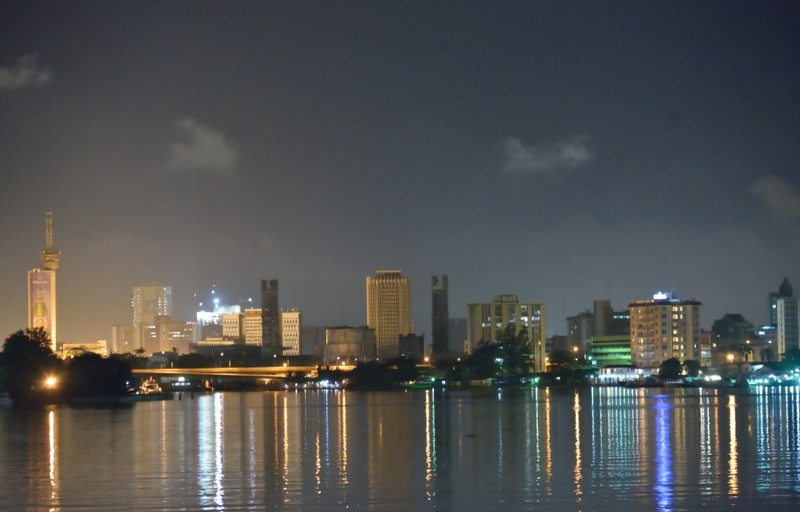
By contrast, Ghana, Kenya, Rwanda, South Africa and Uganda all passed the assessment again this year. In East Africa, Kenya joined Uganda and Rwanda on the list of countries that met the standard, while Tanzania fell short — though it was among the 14 governments credited with significant progress. In West Africa, Ghana, along with Côte d'Ivoire, Burkina Faso and Benin, also passed. Nigeria, the continent's most populous nation and largest economy, stands out as the exception.
The stakes go beyond a simple scorecard. This year, Sub-Saharan Africa has returned to international bond markets more actively than it has in more than a decade. The Democratic Republic of Congo raised $1.25 billion in its first-ever Eurobond sale, while Kenya, Côte d'Ivoire, Cameroon and Benin also issued bonds. As investors show renewed appetite for African sovereign debt, fiscal transparency scores are becoming a factor in how cheaply individual countries can borrow. Nigeria's failing grade raises concerns that it could be at a relative disadvantage in this competition for financing.
The State Department says fiscal transparency is directly tied to market confidence, global economic stability and fair market access for foreign companies. It cautioned that failing to meet the minimum standard does not necessarily indicate a high level of corruption, but the assessment is clearly one of the benchmarks investors use to gauge country risk. An economist at the Lagos Business School echoed the State Department's findings, pointing to delayed budgets, poor spending disclosure and weak audit practices as factors eroding confidence in the economy. Nigeria's presidency pushed back, saying the report reflects a narrow assessment against specific US criteria rather than a full appraisal of the government's reform record.
The State Department noted that its criteria are strengthened each year, meaning rankings can shift annually. Whether Nigeria improves its standing next year, observers say, will depend on how thoroughly it overhauls its budget execution process.
넥스트포스트 이종균 기자 jay@nextpost.co.kr


