






The African Union Commission announced on October 27 that Ghana had been selected to chair the Specialized Technical Committee on Communication and Information and Communication Technologies (STC-CICT) during its sixth ordinary session in Libreville, Gabon.
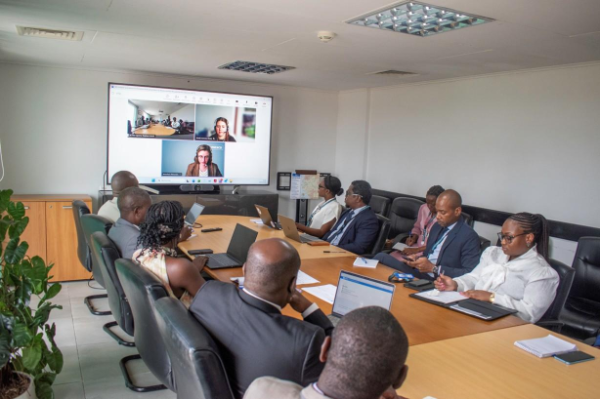
The newly constituted bureau reflects the geographical representation of Africa's five regions. Ghana will serve as chair, while Kenya has been elected first vice-chair and Gabon third vice-chair. Lesotho will serve as rapporteur, with the second vice-chair position representing North Africa to be determined.
Ghana previously represented West Africa as the committee's first vice-chair. Its election to the chairmanship places the country in a position to coordinate discussions and help build consensus among AU member states on digital policy priorities.
The STC-CICT is one of the African Union's specialized policy bodies. It provides a platform for member states to review shared priorities, develop recommendations and coordinate regional initiatives in communication and information technology.
This year's meeting focuses on several areas, including artificial intelligence governance, data protection, digital identity systems, cybersecurity and cross-border data flows.
The discussions are intended to strengthen cooperation beyond national borders and support the development of an integrated African digital economy.
Delegates are reviewing progress under the African Union's Digital Transformation Strategy for Africa 2020–2030, which provides a framework for improving connectivity, digital services and technological capabilities across the continent.
The committee is also examining measures to implement the Continental Artificial Intelligence Strategy, including possible action plans, investment priorities and financing arrangements.
As AI adoption expands, policymakers face the challenge of developing regulatory frameworks that encourage innovation while protecting personal information and addressing cybersecurity risks.
Among the documents under consideration are draft guidelines on AI governance and regulation, data-sharing frameworks, open-data policies and cross-border data transfers.
Digital identity is another important component of the agenda. Participants are discussing interoperability standards that could eventually allow national identity systems to communicate more effectively across borders.
Such cooperation could support public service delivery and create opportunities for digital trade, although implementation would depend on national regulations, technological readiness and agreements between participating countries.
The African Union has emphasized that stronger digital connectivity alone will not be sufficient to achieve meaningful integration. Secure data exchange, interoperable systems and accessible public services are also considered essential.
Speaking at the opening session, Kamugisha Kazaura, the African Union Commission's Director for Infrastructure and Energy, emphasized the importance of connectivity, secure data exchange and interoperability in supporting integrated public services and digital innovation.
Aline Sylvie Minkomietoua, Secretary-General of Gabon's Ministry of Digital Economy, Digitalization and Innovation, highlighted the implications of digital policies for access to knowledge, economic opportunities and the protection of citizens' personal information.
The United Nations Economic Commission for Africa also stressed that progress in digital transformation should be measured by improvements in services, economic opportunities and accessibility rather than technology deployment alone.
The African Union has 55 member states, with substantial differences in infrastructure, economic development and institutional capacity.
These disparities remain an important consideration in designing continental digital policies. Countries with advanced digital infrastructure may be better positioned to adopt emerging technologies, while others continue to face challenges involving connectivity, affordability and technical expertise.
The meeting also addresses digital inclusion, particularly opportunities for young people and women to participate in the technology sector.
Improving digital skills, expanding access to public digital infrastructure and reducing barriers to technology adoption are among the broader objectives under discussion.
Technical sessions are scheduled to conclude on October 28, followed by a ministerial meeting on October 29.
Recommendations emerging from the discussions are expected to inform subsequent African Union policymaking processes.
With Ghana assuming the committee chairmanship, attention will turn to how member states translate their shared priorities into practical cooperation on AI regulation, data governance and digital infrastructure.
넥스트포스트 이종균 기자 jay@nextpost.co.kr


