






Communications Minister Sam George urges investment in local-language AI, digital infrastructure and stronger African participation in global technology governance.
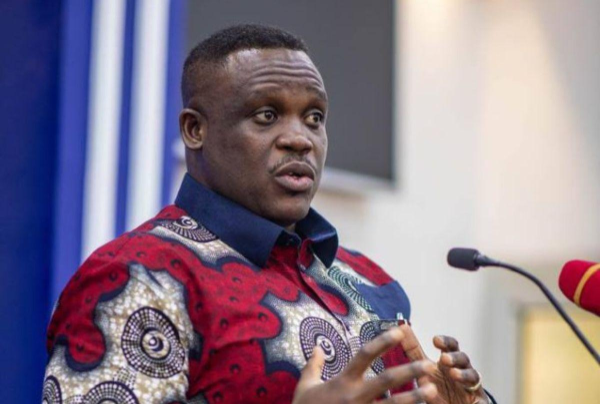
According to Ghanaian government statements and local media reports on November 4, Minister for Communication, Digital Technology and Innovations Samuel Nartey George raised the issue at the 15th African Internet Governance Forum (AfIGF), held in Accra on November 3.
George emphasized the need for African countries to develop AI language models that reflect their linguistic diversity, cultural heritage and social realities, rather than relying primarily on technologies developed outside the continent.
He also urged African governments to play a more active role in shaping international digital governance policies, arguing that the region should contribute to the rules governing emerging technologies rather than remain solely a consumer of them.
The development of generative AI depends heavily on the availability, quality and diversity of training data.
Languages with extensive digital resources generally benefit from more advanced AI systems, while those with limited online representation may struggle with translation accuracy, speech recognition and natural language processing.
This imbalance presents a particular challenge for Africa, where hundreds of languages are spoken across communities with different educational, cultural and technological environments.
In an April 2026 report, UNESCO highlighted the risk of African languages being marginalized in the development of artificial intelligence.
The organization noted that AI systems trained predominantly on widely represented languages, such as English, may perform less effectively when processing African languages with comparatively limited digital training resources, including Hausa and Zulu.
The consequences extend beyond technical performance.
As AI-powered services become more widely used in education, healthcare and public administration, inadequate support for local languages could prevent some communities from benefiting equally from digital innovation.
Languages also preserve cultural traditions, historical knowledge and community identities. Their limited representation in AI systems could therefore contribute to wider cultural and informational inequalities.
Ghana Advocates Locally Developed AI Models
Speaking at the forum, George stressed that African nations should invest in AI systems capable of understanding their own languages and cultural contexts.
The approach would allow developers to address regional needs more directly while reducing dependence on technologies primarily designed for other markets.
Several African initiatives have already begun exploring locally relevant AI models.
UNESCO has highlighted GhanaGPT, an initiative developed to support Ghanaian language use alongside English, as an example of efforts to make AI more accessible to local communities.
However, developing such systems remains challenging.
Limited datasets for indigenous languages can affect translation quality and increase the likelihood of inaccurate or misleading responses.
Building reliable language models requires sustained investment in data collection, computing resources, research infrastructure and technical expertise.
George also emphasized the importance of expanding digital skills development and strengthening the technological foundations needed to support homegrown AI innovation.
Stronger African Voice in Global Digital Governance
Beyond technology development, Ghana is seeking greater African representation in international discussions on AI regulation and internet governance.
George argued that African countries should participate more actively in decisions shaping global digital standards, particularly as AI increasingly influences access to information, economic opportunities and public services.
He called for stronger regional coordination through international platforms, including the Internet Governance Forum and the International Telecommunication Union.
The minister also identified cybersecurity, personal data protection, children's online safety and the rights of digital content creators as important policy priorities.
These concerns are closely connected to broader continental efforts to establish a coordinated approach to artificial intelligence.
In 2024, the African Union adopted its Continental Artificial Intelligence Strategy, outlining priorities such as responsible AI development, digital infrastructure, workforce development and cooperation among member states.
The strategy seeks to strengthen Africa's capacity to develop and govern AI technologies while addressing inequalities in access to digital resources.
Ghana's latest position reflects the growing importance of moving from regional policy commitments toward practical investments in locally relevant AI systems.
For African countries, achieving greater digital sovereignty will depend not only on developing new technologies but also on building the infrastructure, expertise and regulatory capacity needed to sustain them.
Expanding access to African-language datasets, supporting local researchers and strengthening cooperation among governments will remain central challenges as the continent seeks a greater role in shaping the future of artificial intelligence.
넥스트포스트 이종균 기자 jay@nextpost.co.kr


